
The largest artisanal cured meat producer in the United States, parent company of the brands Creminelli Fine Meats, Daniele, Del Duca and La Quercia.
Since 2025 Square Marketing has been producing the video series Where It Comes From, shot in the Italian regions where the techniques with which the
The cured meats from Creminelli Fine Meats, Daniele, Del Duca and La Quercia are produced in the United States. The techniques used to make them come from Varzi, from Piacenza, from the hills above Parma. At the counter of an American supermarket that distance is invisible, and a consumer who has never heard of Coppa Piacentina has no reason to choose an artisanal cured meat over an industrial one.
Where It Comes From was created to shorten that distance: to bring the American audience to the towns where those techniques were born, with founder Cristiano Creminelli as narrator. The brief entrusted to Square Marketing was pure production: turning a series concept into episodes that can actually be shot, in real places and with real producers, within a 5-8 minute narrative arc that keeps engaged even those who know nothing about Italian cured meats.
The series unfolds in two stages. First Cristiano’s personal roots, then the regions the products Americans find at the counter come from.
The format and editorial line of the series belong to Charcuterie Artisans, which also handles publishing on its own channels. Square Marketing works across the entire production chain: episode writing from the client’s brief, production plan, shooting, post-production.
The pivot of every episode is Cristiano Creminelli, founder of Creminelli Fine Meats and face of the series. Cristiano doesn’t act. He knows the products and the regions through family history, and he is far more credible when he tells the story in his own words. That’s why the episodes aren’t written as scripts, but as structures of questions: each scene has a numbered question, the key points the answer must touch and the time within which it must be delivered. The result is a solid framework that leaves the naturalness of the storytelling intact.
From this setup come three documents for every trip: the episode storyboard, the minute-by-minute production plan, the briefing for Cristiano.
From Charcuterie Artisans’ brief to the complete storyboard: 4-6 scenes per episode, each with set, question, answer key points and timing. All in English, the language of the talent and of the final audience.
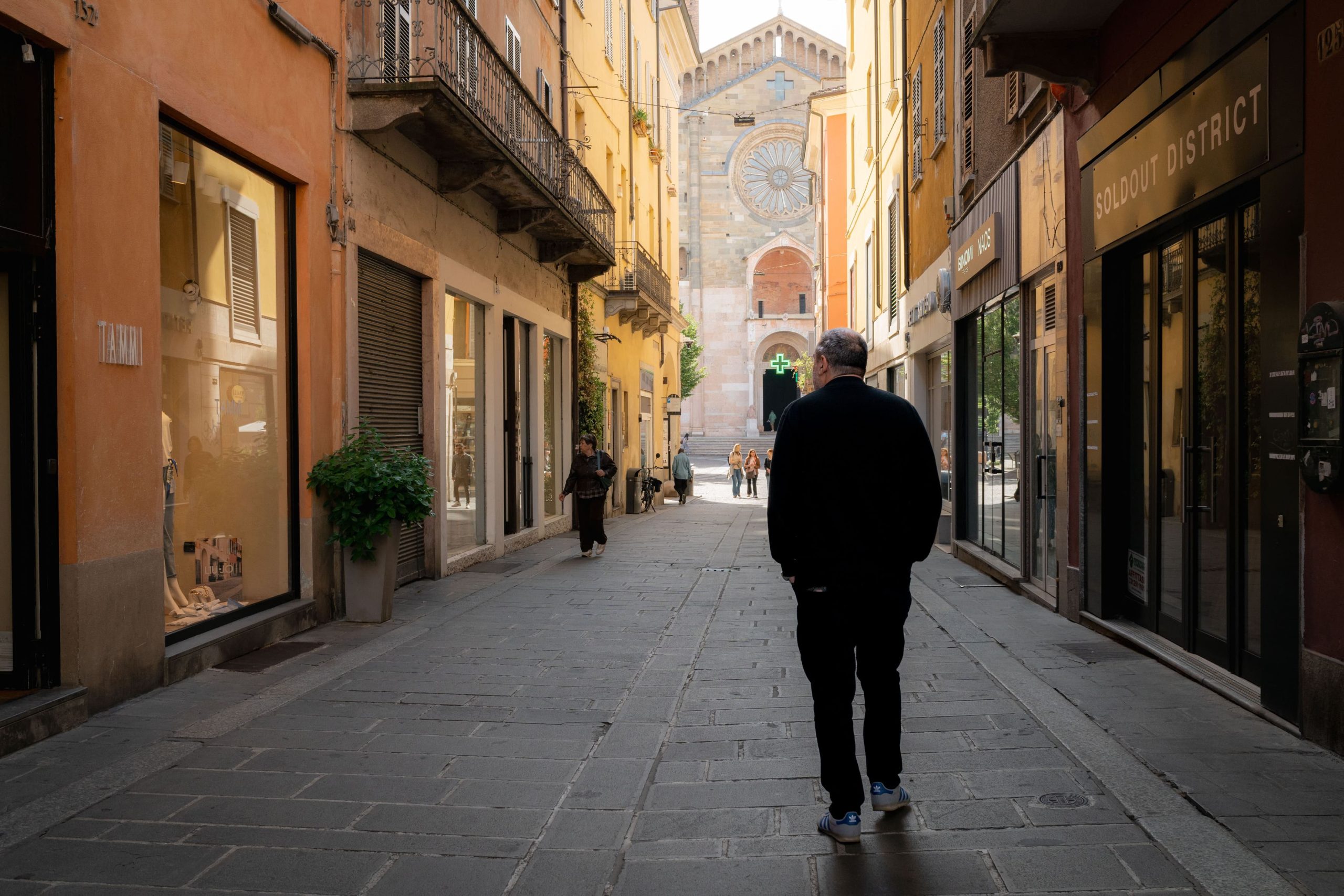
This is the block that decides whether a trip like this holds together, and it’s where most of the work ended up. The May 2026 trip gives the measure: four episodes in three days, six locations across Emilia-Romagna, Oltrepò Pavese and Liguria, a dozen different sets and a single person in front of the camera. Busseto, Parma and Sanguinaro on the first day. Piacenza in the morning and Varzi in the afternoon on the second, with an Apennine pass in between. Genoa on the third. In a grid like this, every hour lost on the road is a scene that doesn’t get shot.
The production plan cross-references real travel times with the position of the sun: the order of the scenes doesn’t follow geographic convenience but light, because a set that works in the morning is backlit in the afternoon. On top of that are the appointments fixed with the business owners, which don’t move and around which the rest of the day has to be built. And there’s the unexpected, which on a trip with no recovery days isn’t a possibility but a certainty: every day has calculated margins and alternatives already prepared, so that a rainy morning is solved by moving up an interior instead of renegotiating everything on the spot.
All without a single location scout. Every shooting set and every b-roll was decided remotely before departure, working on research, photographic material and contacts on the ground. Even the circular structure of the episodes, which open and close at the same point in the city, was born at the desk: it means planning to go back at the right moment of light.
The extreme case was Genoa, where the day fell in the middle of the Alpini National Gathering with 400,000 people expected in the city. It was built to exploit the crowd instead of suffering it: the scenes that required silence shot at dawn before the people arrived, and a slot deliberately left empty in the middle of the day for an unwritten scene, among the Alpini, with Cristiano cutting the salami and sharing it with them.
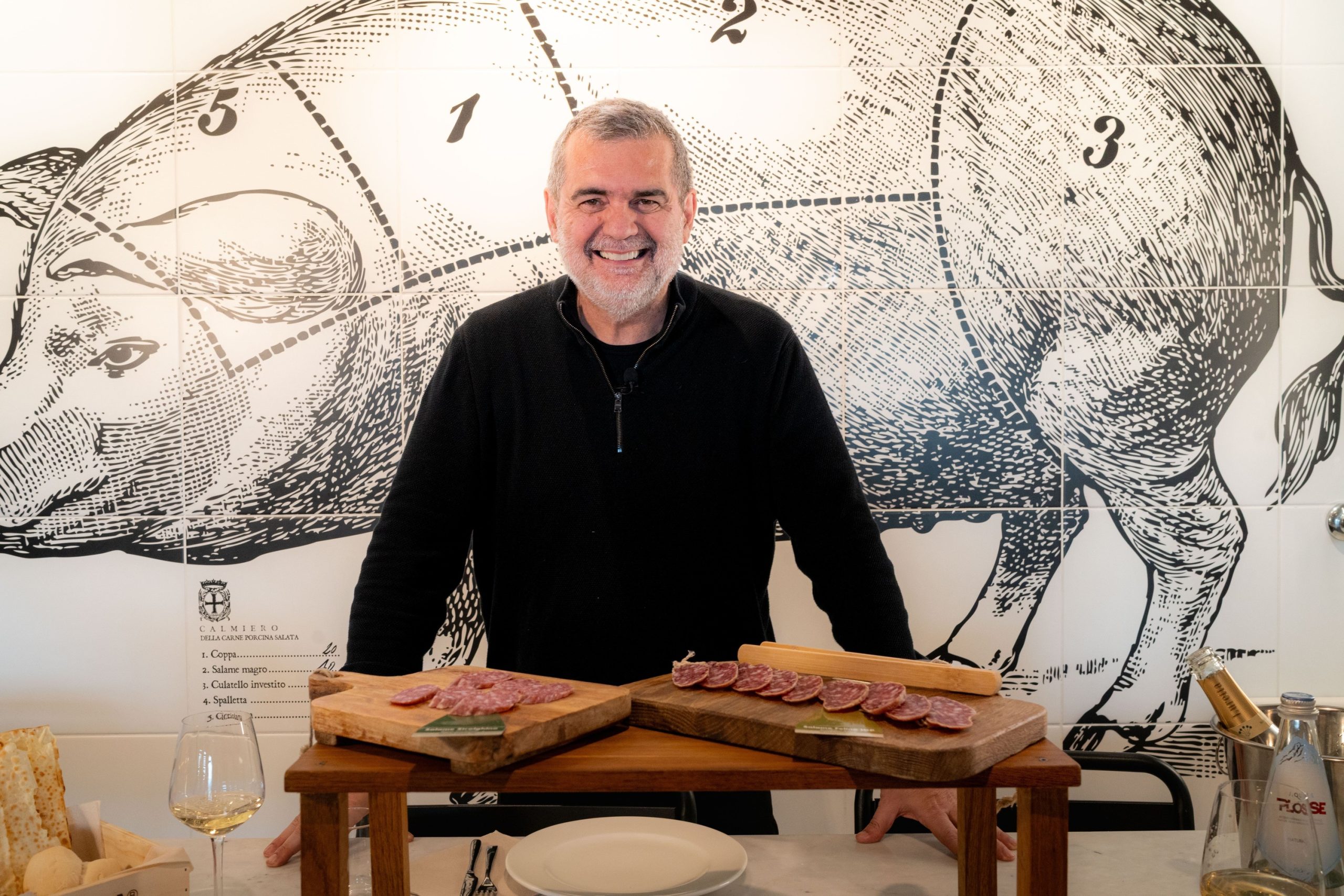
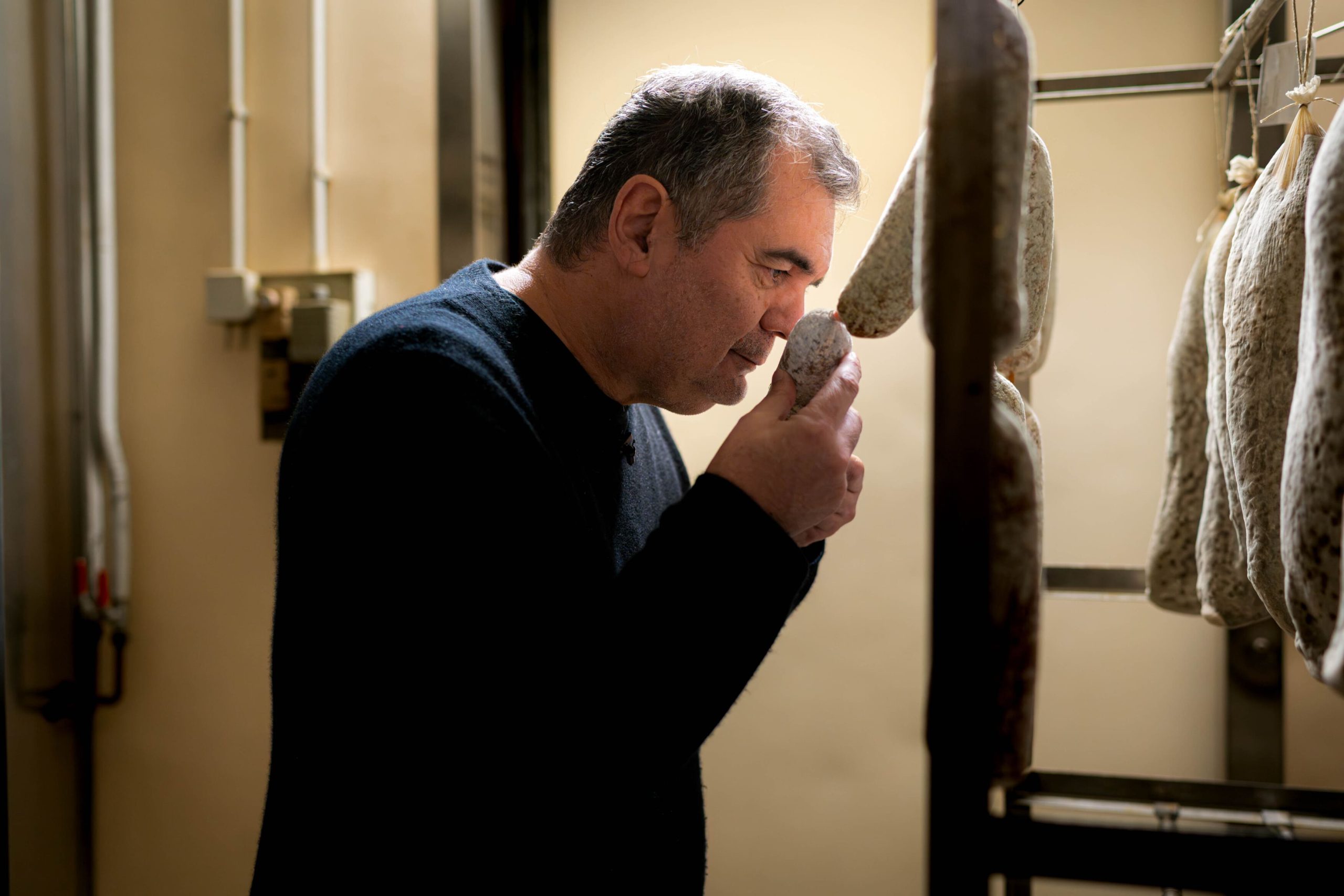
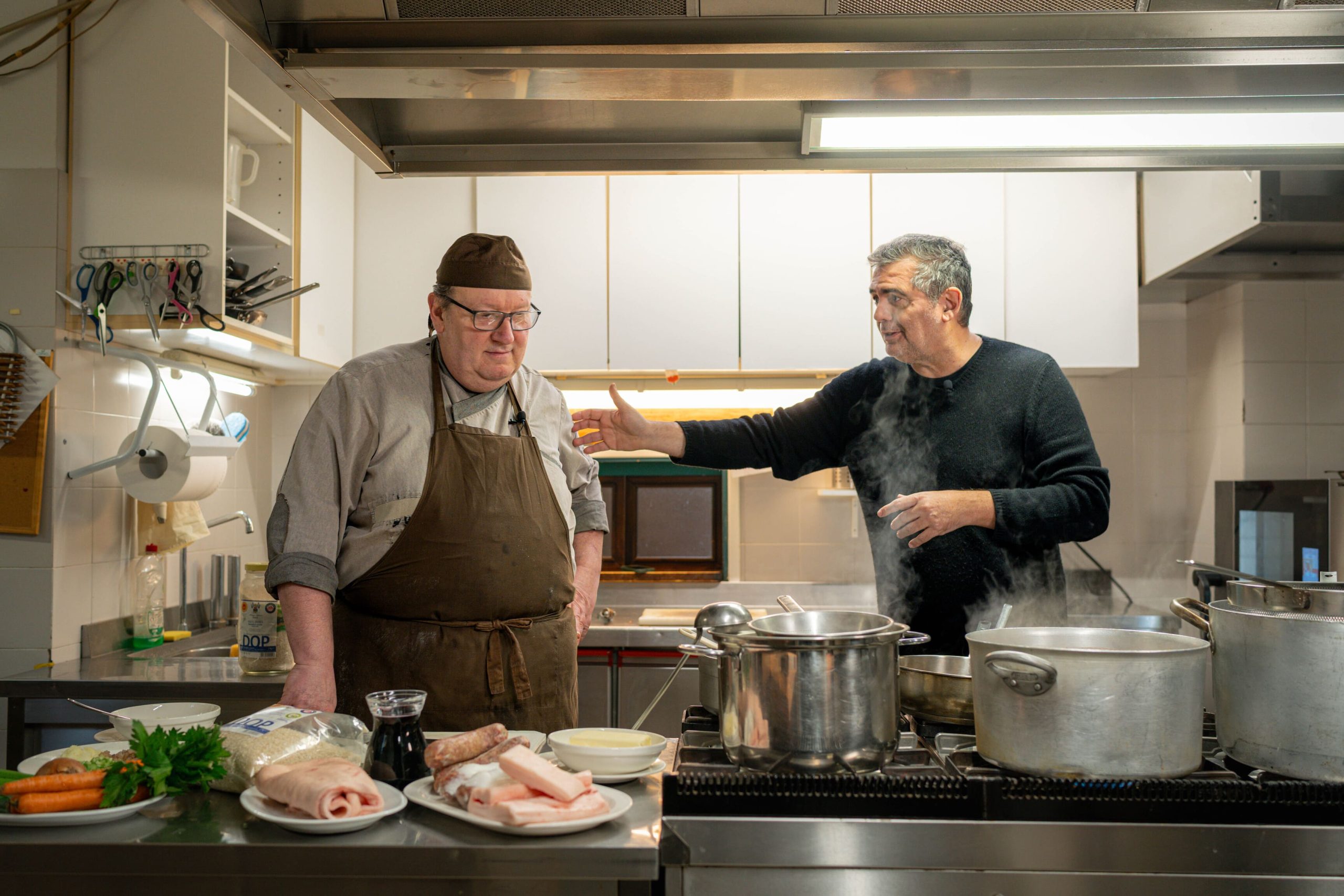
Two trips with two opposite registers. On December 1 and 2, 2025, everything in Biella, in the Creminelli family’s cured meat plant, for the three episodes on his roots: childhood in the workshop and what his father taught him, the Casalingo aged in terracotta and recognized by the Ministry of Culture among traditional recipes, the Panissa cooked by a local chef. Two days, a single area, an intimate story. From May 6 to 8, 2026, the opposite: four episodes in three days across Emilia-Romagna, Oltrepò Pavese and Liguria, with Prosciutto di Parma, Coppa di Piacenza, Salame di Varzi and Genoa with the Alpini. Shooting takes place at Baratta Salsamenteria Storica in Busseto, at Fattoria di Parma in Sanguinaro, at Antica Salumeria Garetti, since 1938, in Piazza Duomo in Piacenza, in the village of Varzi and at the Porto Antico in Genoa.
A two-person team in both cases, in-house equipment, a light setup designed to move quickly. Every episode is shot with two cameras: one holds the wide shot of the scene, the other works on close-ups. Once the spoken scene is done the two operators split up, one stays on Cristiano and the other goes to the b-roll, which, being already decided in the storyboard, requires no decisions on the spot. That’s why four complete episodes came out of three days.
Editing, color, audio and English subtitles. Square Marketing also created the opening title sequence and the jingle that open every episode of the series. Two formats come out of each episode: the long version, between 5 and 8 minutes depending on the series, for YouTube and for the screens in stores, and a vertical of about 60 seconds for Instagram, built like a trailer. The vertical deliberately leaves out the episode’s narrative twist, which remains the reason to watch the full video. The material from an entire trip is delivered within a week of the end of shooting.
Seven episodes shot in five shooting days, with a two-person team following everything from the first line of the storyboard to the delivery of the files.
Fourteen deliverables in total between long versions and social verticals, produced in-house without the support of external suppliers.
The b-roll decided at the writing stage and the two-camera setup bring already-organized material into editing. All the footage from a trip, long episodes and verticals, is delivered within seven days of the final take.
The same narrative framework held up through two stationary days in a family cured meat plant in Biella and three days on the move across six locations and three regions, with a full day inside an Alpini Gathering of 400,000 people. The context changes, not the method.
In August 2026 the same crew returns to Calabria for two more episodes, shot between the hinterland of Monte Poro and the Costa degli Dei with two different producers and two separate visual worlds. Third trip, same team.
The episodes run on the group’s YouTube channel and in rotation on the screens of the deli corners of the four brands in American supermarkets.
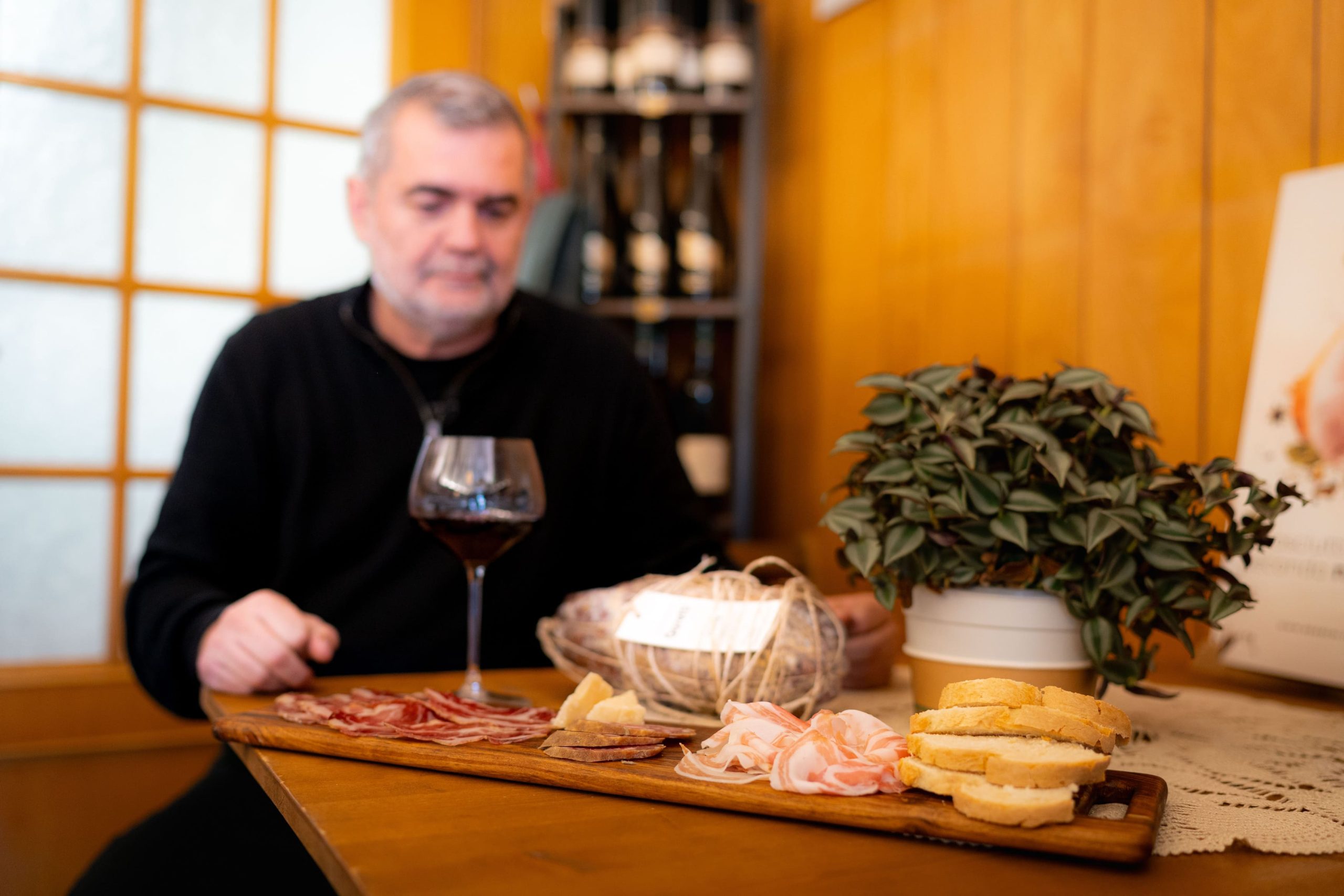
An American company that entrusts an Italian crew with the most delicate part of its brand storytelling, and calls it back for the third time in nine months, says more about the method than any channel metric could. Where It Comes From works because every episode starts from a precise plan and ends up in a video that doesn’t look planned: invisible structure, natural storytelling.
We don't sell services. We build direction.
We don't seek visibility. We build relevance.
We don't chase trends. We build systems that last.
Are you ready
to make it real?